Monday 16th March 2026
Water Lane Farm
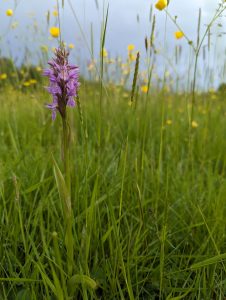
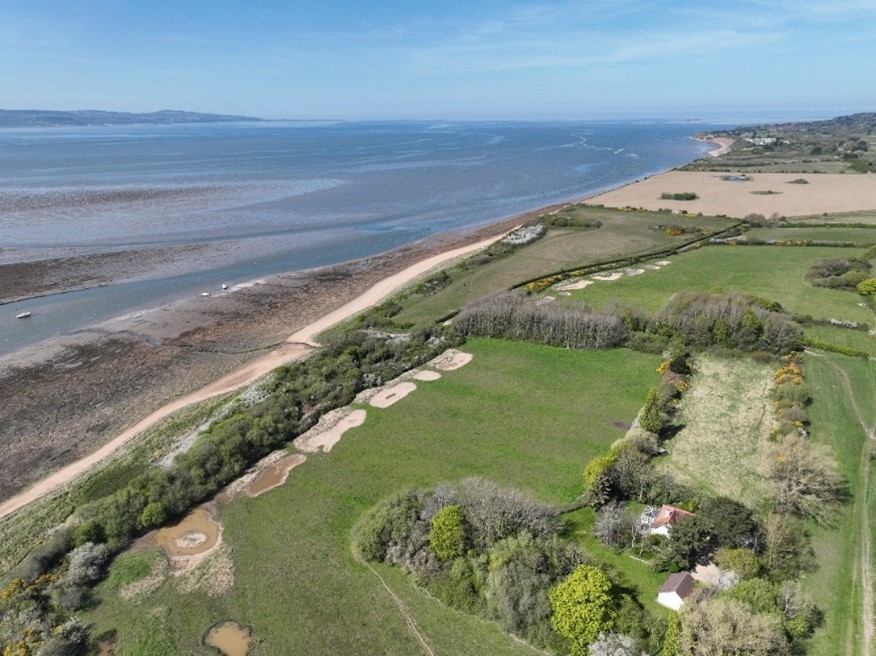
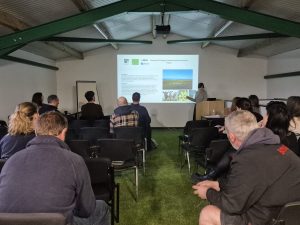
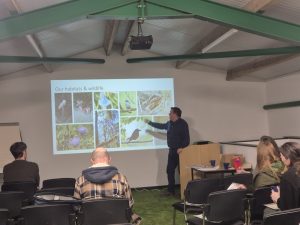
Recently, MEAS brought together landowners, farmers and environmental professionals for an event hosted by Water Lane Farm, Knowsley focused on nature recovery opportunities for landowners and farmers.
A key message throughout the event was clear: nature recovery can be delivered alongside productive farming, working estates and landholdings, forming part of a more resilient and diversified land management approach.
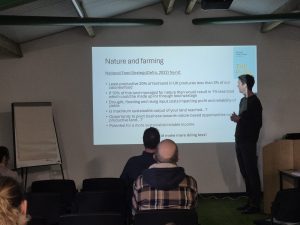
The event celebrated the delivery and outcomes of the Liverpool City Region Farmland Species Recovery Project and marked the launch of MEAS’s Habitat Banking Guide for landowners . It also provided an opportunity to share practical experience and discuss how nature recovery can be integrated into working farm businesses.
Drawing on delivery experience from the Liverpool City Region Farmland Species Recovery Project, we shared practical examples of how targeted interventions can be successfully integrated into working farms and estates in a way that supports both biodiversity and business resilience.
Launching BNG Guide
The event also marked the launch of MEAS’s Habitat Banking Guide, developed to support landowners in understanding how to get involved in Biodiversity Net Gain (BNG). The guide sets out how landowners can create or enhance habitat on their land to generate biodiversity units, which can then be sold to developers to meet planning requirements.
It also highlights key considerations, including:
- Identifying suitable land, particularly lower-yielding or difficult-to-manage areas
- Understanding long-term management requirements
- Entering into agreements that secure habitat delivery over time
Alongside Environmental Land Management schemes, BNG presents a practical opportunity for landowners to diversify income while contributing to nature recovery. This forms part of MEAS’s wider role in supporting land managers to navigate emerging environmental markets and funding opportunities.
SFI 2026
An update on the Sustainable Farming Incentive (SFI) for 2026 highlighted a simplified offer, with fewer actions focused on clear environmental outcomes and a £100,000 annual agreement cap per farm business . Some lower uptake or less effective options have been removed, for example species-rich grassland (GRH6) and certain buffer and planning actions while payment rates have been adjusted, with increases for actions such as low-input grazing on moorland (UPL2, UPL3) and reductions for options like winter bird food (CAHL2) to better reflect delivery costs.
The scheme will operate through defined application windows, reflecting increased demand and tighter budget control. Overall, SFI continues to support practical, nature-friendly farming, with growing emphasis on how it can be combined with other funding streams such as Biodiversity Net Gain.
Hartgrove Farm Case Study
A highlight of the event was a farmer-led case study from Roger Lomas of Hartsgrove Farm. The case study demonstrated how Biodiversity Net Gain (BNG) can be delivered alongside a working farm business. At Hartsgrove Farm, Cheshire a range of habitats have been created, including species-rich grassland, woodland and scrub. Importantly, these habitats are not simply taken out of production, the species-rich grassland is actively managed as hay meadow, with hay sold to local stables, continuing to generate an income. Scrub and tree planting has been delivered in a targeted way, including on steeper areas of the farm that are difficult to manage through conventional mowing, making better use of the land.
The project has also created opportunities for community engagement, with local groups such as scouts and cubs involved in tree planting, alongside educational visits from schools for activities such as pond dipping.
Overall, the case study demonstrated how BNG can operate in practice, integrating habitat creation into the farm business in a way that supports both nature recovery, long-term farm income, and community engagement.
Key Themes and Discussion
The event generated strong discussion throughout, with a wide range of incisive questions. Conversations focused on how environmental delivery can fit within existing farm systems, the role of Biodiversity Net Gain and habitat banking, and the practicalities of long-term management.
Feedback highlighted the value of practical, real-world examples and the opportunity to explore how these approaches could apply to individual landholdings. There was also clear interest in understanding how nature recovery can be supported in a way that is both achievable and financially viable.
A key area of discussion was the long-term security and reliability of BNG agreements, particularly in relation to how habitats are managed over time and how risks are addressed. Questions were raised around scenarios such as habitat failure due to changing weather patterns, climate pressures or changes in surrounding land use, and what this would mean for landowners entering into agreements. These discussions reflected a growing awareness of both the opportunities and responsibilities associated with nature recovery, and the importance of clear guidance and support when considering participation.
Looking Ahead
The level of discussion reflected a strong appetite to explore these opportunities further, particularly where BNG and other funding mechanisms can support both environmental outcomes and landowner business resilience. Many attendees expressed an interest in continuing the conversation and understanding what this could look like in practice on their own land.
MEAS is well placed to support this, working at the interface between planning, development and the natural environment. Through this role, there is an opportunity to bring together landowners, funding mechanisms and delivery partners to help turn interest into practical, on-the-ground projects.
With local plans across the Liverpool City Region identifying significant housing growth, including development on green belt land, there will be an increasing requirement to mitigate impacts on designated sites and priority species. This creates opportunities for farmland to play a key role in delivering that mitigation through targeted habitat creation and management, supported by funding from mechanisms such as Section 106 agreements and Biodiversity Net Gain alongside SFI.
Building on the momentum from the event, we are now looking to support the development of a local network of farmers and landowners. This will provide a platform to share knowledge, explore opportunities collaboratively, and develop projects that deliver both environmental and business benefits. There is also potential to develop future projects building on the Farmland Species Recovery model, bringing together habitat creation, farm business resilience and accessible funding to deliver nature recovery at a landscape scale.
Get in Touch
If you are interested in exploring opportunities for your land, or would like to be part of this developing network, we would be pleased to hear from you.
MEAS can provide advice and support on habitat creation, funding opportunities and how to navigate emerging mechanisms such as Biodiversity Net Gain.
To find out more or start a conversation, please get in touch with the team.
info.eas@sefton.gov.uk